

Monday, January 28
Kiwi walker helps Rarotonga's Creative Centre
This story by Barbara Dreaver, TVNZ's Pacific Correspondent, is about James Talbot who is walking the length of New Zealand to raise money for the Creative Centre.
At the beginning of her media career Barbara worked for Cook Islands News. She still has a soft spot for the Cooks and is very popular here.
See this story about James Talbot on the Cook Islands News website.
Follow James Talbot's walk on Facebook.
Make a donation on the Creative Trail Givealittle page.
Saturday, February 24
Aitutaki Vet Trek is finally here!

6.97 sq mi land
pop about 2000
cat population: “unknown” large feral population plus owned cats
Beauty of Aitutaki: unparalleled. “the Most Beautiful Lagoon in the World” (Lonely Planet quote)
Cats, Paying it Forward, and the Kindness of Strangers
A year go my husband and I came to this beautiful paradise, and as most people do, we fell in love with the islands, the people and communities. During our visit, a chance meeting on Aitutaki with someone who shares a passion for animals led to an idea being born to help with animal welfare, especially the cats of Aitutaki.
Almost a year later a small team of us arrive here in the Cook Islands with such gratitude for the phenomenal support we’ve received on so many levels and from numerous people and organizations. Our hearts soar to experience such warmth and true compassion. For us this is “paying it forward” to be able to help the animals and thus the people of the Cook Islands. It all started with the kindness of strangers, and now we know and understand that that is the Cook Island way.
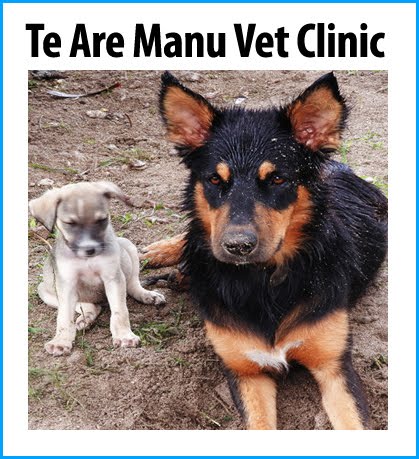
We’d like to recognize and thank Gwen Welland and the people of Te Are Manu Clinic for all of their support and help with the government approval process, customs, helping us getting the donations we brought in order, and getting local support for our endeavors. We had quite a few changes and alterations during the process of coming here, and Gwen was always available to help get things through in a pleasant and efficient manner. Meitaki ma’ata Gwen.
Air Rarotonga has also sponsored us in a big way and has donated all 5 of our round trip airfares to Aitutaki. Thank you Ewan Smith, for your continuing support of the animals of the Cook Islands.
Thanks to the businesses and community of Aitutaki for their generous donations of dinners, lodging, a vehicle (with fuel) to pick up and return the animals, and even a Vaka cruise! When we’re not working we will certainly enjoy being able to drive to the lagoon, snorkel and eat some great food! Yumm!
Thanks to the Islander Hotel for 2 day rooms to rest and make ourselves presentable before going over to Aitutaki. Much appreciated!
We’d also like to thank the veterinary clinics of Corvallis and Eugene, Oregon, USA for their very generous donations of supplies, medicines, more supplies, and heaps of supplies! When we asked for just a few clinics to clean out their closets, they surely did! So much generosity made it hard to bring everything, but we managed to stuff 5 huge suitcases full to the brim! We know that the supplies will be well used and especially for the outer islands. Thanks Oregon! Could not have done this without you!
Also want to thank all the individuals in the states, both friends and new friends, who donated to our cause with cash donations to purchase many of the supplies for surgery. Again could not have done this without raising the money for the medicine purchases.
I’d like to introduce our team:
Dr. Sharon Forster-Blouin, DVM of Corvallis Cat Clinic, Corvallis, Oregon
Dr. G. Rochelle Brinton, DVM of San Diego, CA & founder of the Feral Cat Coalition of San Diego.
Ms. Sheri Pandey, CVT veterinary nurse, Corvallis Cat Care, Corvallis, Oregon
Mr. John Adams; assistant, all around go-for
Ms. Tomie Timon; assistant, chief cat herder and organizer of the mission
So when it’s all said and done, it always comes back to helping the animals.
They have no second agenda, their lives are valuable as are all lives, and if we can pay it forward to help them live better lives, what can be better?
Meitaki ma’ata and Meitaki atupaka!
Mataora matou, i te aere mai, ki konei!

Tuesday, July 4
Maungatea's mysterious basalt boulder
Hmmm. Loooooong time since I added anything to RaroLens.
That's because most of my videos these days are of various travel destinations so I've decided to put them on a new blog:
www.havepension-willtravel.com
But today I have a Rarotonga-based video so here it is.
A group of friends recently hiked up to Maungatea Bluff, heading into the hills on the northern side of Rarotonga.
We were going to see a strange basalt boulder that Gerald McCormack, the director of the Cook Islands Natural Heritage Trust, found a while ago.
This boulder had tumbled from the bluff down the side of the hill and come to rest a short way off the side of the track so wasn't particularly easy to see if you didn't know it was there.
There are lots of basalt boulders up there but most of them are breccias, conglomerates made of basalt rubble held together by molten lava pouring over them.
The mystery boulder has a series of parallel grooves with rounded bottoms along its surface and on Rarotonga there's nothing else like it that anyone knows about.
Gerald wanted to re-visit the boulder to take more photographs and we all tagged along.
He originally thought the grooves might be man-made but after a lot of online research he found similar rocks in New Zealand, in particular at the Wairere Boulder Nature Park in Northland.
Geologists say these were formed when rain dripped from trees onto humus on the ground. The humus acidified the water which then formed streamlets that ran down the face of the rocks. Over millions of years the water dissolved the rock to form grooves (often called flutes).
There may be other fluted boulders somewhere on the hillside or possibly even signs of flutes up on the bluff but the ground isn't easy to walk over. We were on a track and it was quite a scramble in a lot of places. It's not surprising, then, that nobody has reported seeing anything similar on Rarotonga.
It was lovely being up in the bush but not particularly peaceful. The squawking sound you can hear on the video is the sound of birds, I think they are petrels, flying back from feeding at sea which they apparently do around midday.
Flying is clearly the best way to get to and from the bluff.
We had to walk, make that scramble, back down.